MIAMI GARDENS, Fla. — The Miami Dolphins entered training camp expecting a fresh start under first-year head coach Jeff Hafley, but few players anticipated the culture shock that awaited them on the opening morning.
Hafley has made it clear since arriving in Miami that the Dolphins are entering a new era built around toughness, accountability and competition rather than comfort. His first training camp has already featured a noticeably more physical approach than previous years, reflecting the identity he wants this team to embrace.
But according to multiple players inside the organization, Hafley introduced one additional rule before practice that immediately caught the entire locker room by surprise.
Beginning this week, every player who loses three consecutive one-on-one drills during practice must remain on the field after the scheduled session ends to complete an additional conditioning circuit in front of the entire team.
The rule applies equally to rookies, Pro Bowl veterans and team captains.
No exceptions.
The decision reportedly stunned several players when Hafley first announced it during the morning team meeting.
For years, many veterans had grown accustomed to individualized post-practice work, but making conditioning a public consequence for losing competitive drills represented a dramatic cultural shift.
The message was impossible to misunderstand.
Every rep now matters.
Coaches believe the new system will increase competitiveness throughout practice while eliminating any temptation for players to coast through individual periods.
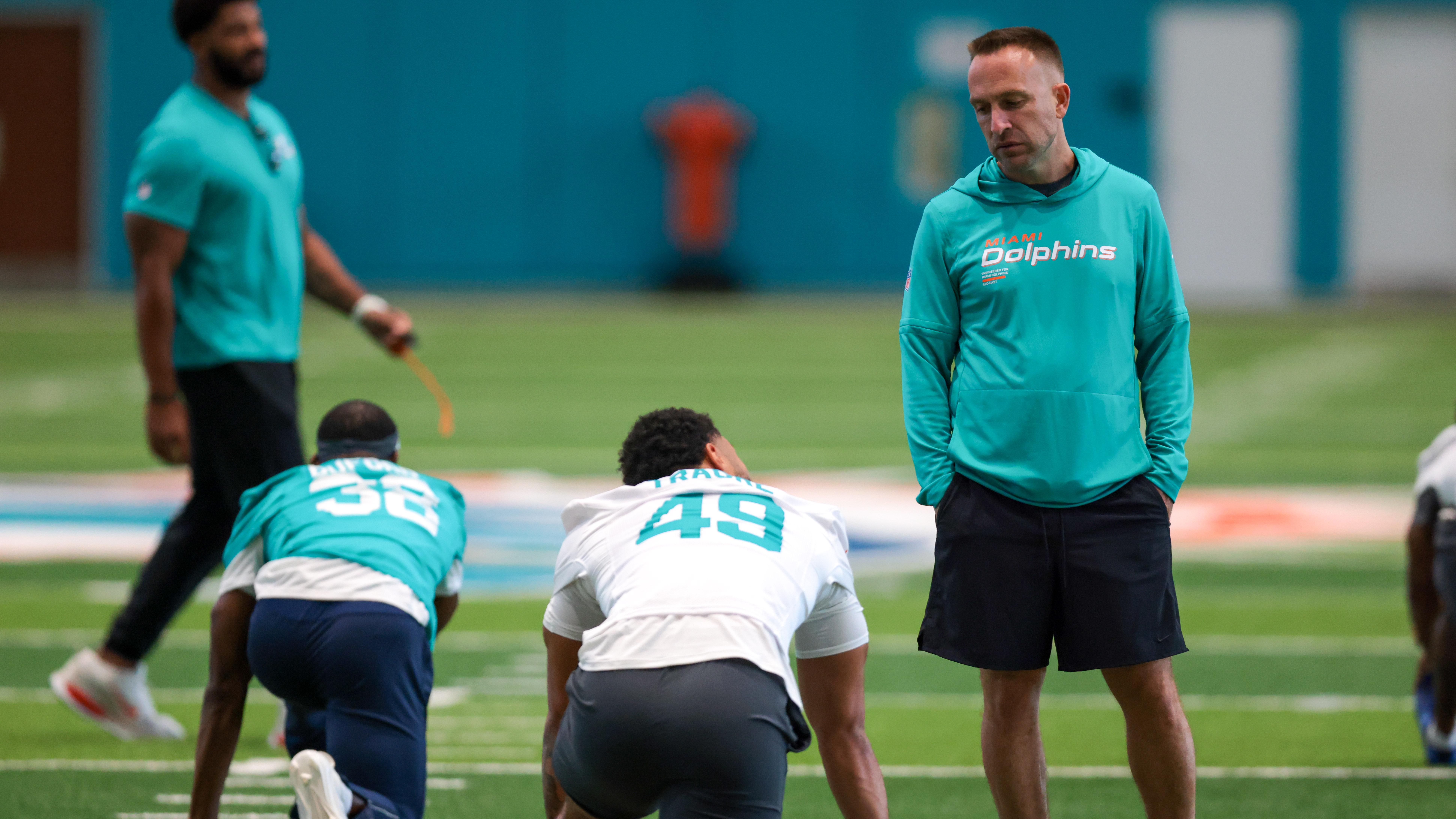
Head coach Jeff Hafley shared his perspective with the entire team and received strong support.
“You can’t become a champion just by celebrating like a badass or bragging about how many years you’ve been playing.”
"Don't act like a championship team. Practice like a team that's hungry to become one."
Several younger players admitted the announcement created additional pressure, but many also viewed it as an opportunity to prove themselves against established veterans.
Rather than avoiding difficult matchups, coaches have encouraged players to embrace them.
The Dolphins have already placed a greater emphasis on physicality and competitive periods throughout camp, with Hafley consistently stressing that effort and execution—not reputation—will determine playing time.
One veteran defensive player reportedly joked after the meeting that "nobody wants to be the guy still running when everyone else is heading to the locker room."
The laughter didn't last long.
Once practice began, the intensity noticeably increased.
Receivers fought harder through press coverage.
Defensive backs challenged every route.
Offensive and defensive linemen celebrated victories in one-on-one drills with an energy usually reserved for game days.
Assistant coaches repeatedly praised the increased urgency, noting that players competed through the final whistle rather than easing off late in practice.
For Hafley, however, the new rule has little to do with punishment.
Instead, it is designed to reinforce the competitive identity he believes the Dolphins must develop if they hope to return to postseason contention.
"Pressure creates habits," Hafley told players before dismissing the meeting. "If we compete like every rep matters in July, we'll compete like every snap matters in January."
Whether the rule remains throughout the season remains to be seen.
But inside the Dolphins' facility, one thing has already become clear.
Jeff Hafley didn't just change the practice schedule—he may have changed the entire culture of Miami football before Week 1 ever arrives.